
Connecting Atlanta: A 7th Grade Vision for Beltline Rail
By Leela, Molly, Ivey, Karis, Olivia, Jackson, and Julia
- 7th Grade students at The Paideia School
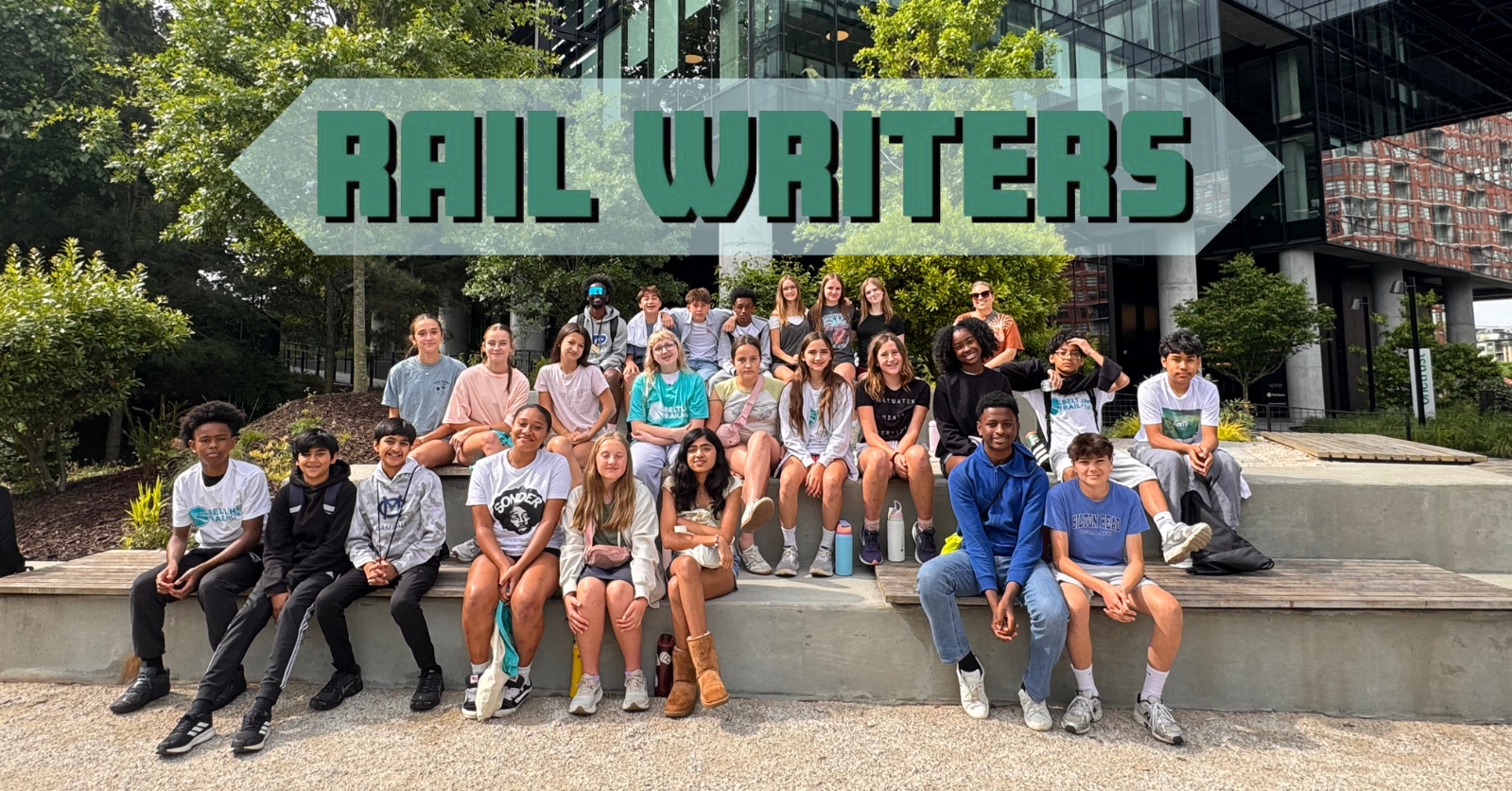
Board Members Cristy Lenz and Matthew Rao met Paideia teacher Hugh Hunter and his students to give his 7th graders the transit advocates’ point of view on the Beltline, a topic they’d studied before the tour. Even before the tour, five of them wrote an essay and gave public comments supporting Beltline rail at a City Council meeting. Their belief in the future and in the ability to use transit to help solve bigger problems of access and inequity was heartfelt and extremely moving to us. We came away thinking that this seventh-grade class knows so much more about Beltline rail than the people in charge of it today or the people in high places trying to stop it.
The BeltLine is a lively place, but it could be so much more. The original idea for the BeltLine was meant to bring people from all over Atlanta into unity. While it has improved life for many, the city council has made so many false promises that they’ve become unreliable. As students growing up in Atlanta whose futures are impacted by this decision, we believe we should have an input on how the BeltLine works. We, as citizens, always talk about how to improve things for the next generation. We are the next generation. Let us tell you a few things you can do to improve our future.
Many times, we’d walk with our friends along the BeltLine and go to a small gas station called Buddies, or our favorite coffee shop. The BeltLine is not wide enough for all of the bikers and walkers on it. There are a lot of bikers on the BeltLine, and we have to walk into the grass to let them pass. It can be difficult to even get out of their way in time. Even when we move back onto the BeltLine we wouldn’t have much room and would fall onto the road. If the rail was put in, people would not have to ride their bikes or scooters to work anymore. This would cause fewer accidents and give people more room to walk.
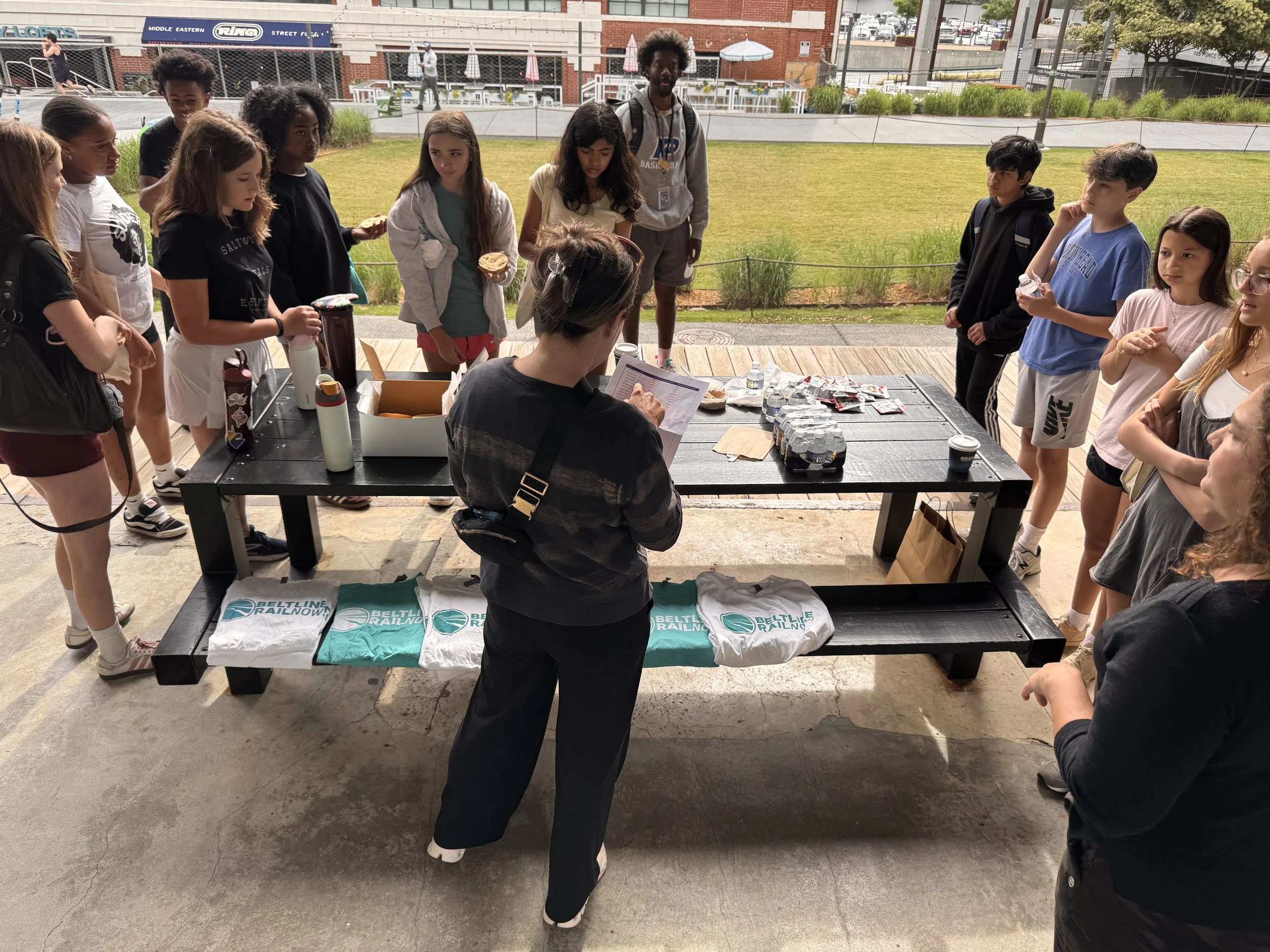
9:30 meetup at Ponce City Market with Emerald City Bagels and water before our walk down the Beltline.
After researching the BeltLine in our seventh-grade Atlanta history class, we believe the BeltLine is not what we wanted, and it’s not what Ryan Gravel once envisioned for the city of Atlanta. We don’t understand what people don’t like about the idea of making the BeltLine more useful. More than half of the Atlanta community has stated, in a referendum, that they want transportation added.
The BeltLine should be a safe and convenient place where people can play and go for walks.
We’ve always lived in Atlanta, and the traffic around the city has been very hectic and dangerous for pedestrians. One dad even advocated for speed bumps to be put in on one of our streets. People have always been speeding around the city and not caring about their surroundings. There was also a crosswalk put in front of one of our homes, and after walking home from school every day, we can say the people in their cars never stop for us. They just speed by.
When we heard what the BeltLine was originally supposed to be, and how bad the city council has been about keeping promises, there was shouting all throughout the classroom. Our classmate Ivey stated that we should be able to do something about the BeltLine rail. And that’s how we ended up here, writing to you. Our teacher thought it was a great idea, and now we are enthusiastically writing this piece. We think it’s time for the city council to step in and keep their promises. We are writing this piece hoping to make an impact.
“I’ve called Atlanta home since I was two years old, and throughout the years I’ve spent here, I’ve had the chance to observe the city change in ways that are hard to ignore.”
All the hectic traffic, everyday construction, and awful potholes can delay your ride by hours at a time. There are car accidents everywhere and nobody knows how to drive. Imagine not having to deal with any of this at all. The Beltline Rail would be a big game-changer for the city. By connecting neighborhoods, it would give citizens a faster, safer, and easier way to get from one place to another.
Over 33,000 car accidents happen every year due to drunk driving according to the Georgia Department of Transportation. The BeltLine rail could prevent more accidents than we know, bringing down the risk of injury or even death. More than just a new transportation system, it would provide better access to restaurants, libraries, parks, fairs, and more, making it easier and more accessible for the city as a whole.
Metro Atlanta is home to around 6.5 million people with busy schedules and different income levels. Many residents do not always have access to a personal car. Bringing streetcars along the BeltLine would give people a very convenient and affordable way to get where they need to go, whether it's work, friends’ houses, or even just to run some errands.
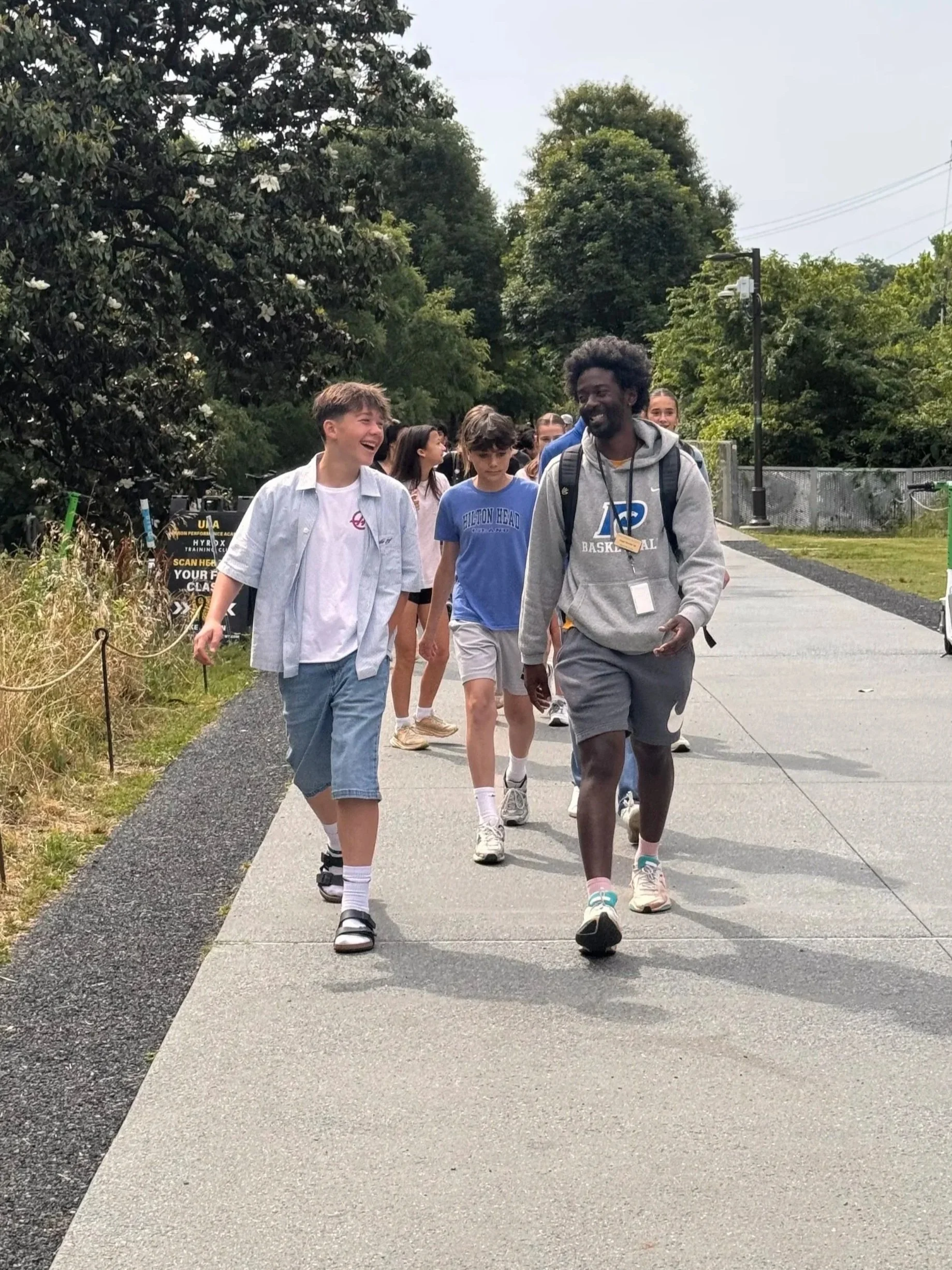
Teacher Hugh Hunter and student Lex Gove lead the students back to the beginning of the walk.
Atlanta is expected to add 300,000 jobs between 2010 and 2030 according to the Atlanta Streetcar System Plan Final report from 2015. “The challenge for the City is to orient the growth to areas that will have better access to transit and are less reliant on automobiles. An estimated 8,450 housing units, 473,000 square feet of retail, and 1.65 million square feet of office development could be added to the City through the implementation of the Atlanta Streetcar System Plan, with more than 70% of each type of growth occurring within Tax Allocation Districts . The City has targeted economic development in underserved areas to ensure that all of the City’s residents have access to employment and affordable housing opportunities. Providing a reliable and integrated transit system throughout Atlanta will help provide connections that support future development along key transit corridors and serve existing residents. The Atlanta Streetcar System Plan has been developed in response to these targets. Atlanta Beltline Inc had a goal of providing 50,000 permanent jobs. The project is also expected to generate $10 billion in private investment, reinforcing its status as a premier engine for urban growth. The addition of the light rail aims to preserve 5,600 affordable housing units and provide reliable transit to underserved communities who depend most on public transportation. Maybe most impressively, the financial impact is backed up by a ten-to-one return on investment, meaning every dollar of public funding spent on the project is projected to yield ten dollars in economic benefit for the community.” We also know building the streetcar will be expensive, but according to the American Public Transportation Association for every $1 invested in public transportation, it returns $5 to the economy.
As people who rely on their parents to get around Atlanta, when we get older, we won't be able to use them as our personal chauffeurs. When we are older, we will want an easy way to get around Atlanta without driving, because everyone knows how bad traffic can be. Also, who says we will pass our driving tests? For people who can't afford cars or bikes or people who want an easy way around Atlanta, the BeltLine Rail would be a great way to get around. MARTA trains also don't go to half of the places we’d like. We think the BeltLine Rail would be a great solution to a lot of these problems.
Now that you’ve heard our input, we hope we can move forward to both a better BeltLine and a better Atlanta. To the Atlanta City Council, we say our community is counting on you to follow through on the promises you keep making. This could be done in two years with 300 million dollars*, yet it’s taken nearly twenty-one years. We can only say and plan so much. Someone needs to take action. We, the community, support those who follow through on their promises, and we’ve told you what we think. Now it’s your turn to make this city a better place.
*The students are referring to the first section of Beltline rail, part of the Streetcar East Extension, a project paused in final design by MARTA at the urging of Mayor Dickens.
